01 · FUNCTION
Disrupt them, generation collapses.
Zeroing the top-ranked channels sharply degrades generation, while removing equally many low-statistic channels has only a limited effect.



Revealing Massive Activations in Diffusion Transformer
A sparse subspace that organizes, localizes, and transports semantic information inside modern DiT models: critical, spatially organized, and transferable semantic carrier channels.
Instead of treating massive activations as mere outliers, the paper studies what happens when we disrupt them, visualize them in space, and transplant them between generations.
Zeroing the top-ranked channels sharply degrades generation, while removing equally many low-statistic channels has only a limited effect.
Restricting image tokens to massive channels produces structured activation maps and masks aligned with salient regions and foreground objects.
Injecting source massive activations into a target trajectory enables localized semantic transfer rather than unstructured pixel blending.
Switch between the sparse channel view, the spatial mask that emerges from those channels, and the masked activation transport pipeline. The three animations share the same corgi example and visual vocabulary.
 corgi in a pink jacket
sunlit desert dunes
SOURCE ⊙ M
TARGET ⊙ (1 − M)
TRANSPORTED
corgi in a pink jacket
sunlit desert dunes
SOURCE ⊙ M
TARGET ⊙ (1 − M)
TRANSPORTED
Source semantics are transported into a target generation while preserving the target scene and composition.
A source concept is composed with a second prompt.



A small dog dozing in a patch of sunlight.
A sandy beach where ‘Love Lives Here’ is written with seashells.
A subject from a reference image is personalized in a new scene.


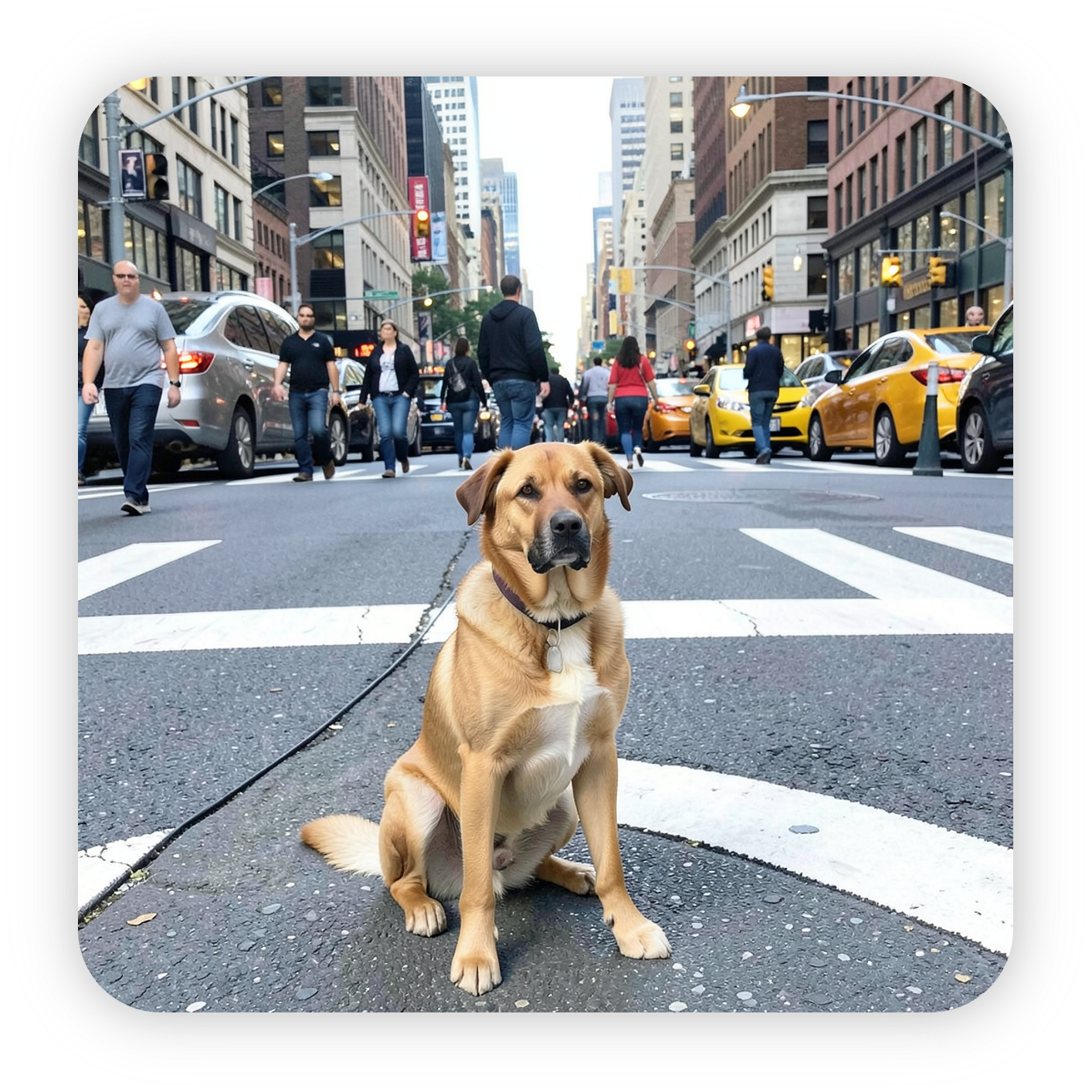
A photo of a dog sitting patiently at a busy city crosswalk.
@inproceedings{turri2026fewchannels,
  title     = {{Few Channels Draw The Whole Picture: Revealing Massive Activations in Diffusion Transformers}},
  author    = {Turri, Evelyn and Bucciarelli, Davide and Sarto, Sara and Baraldi, Lorenzo and Cornia, Marcella},
  booktitle = {{Advances in Neural Information Processing Systems}},
  year      = {2026}
}
A prompt-conditioned trajectory contains a tiny set of unusually large activation channels.
Scroll through the paper's central idea: isolate massive channels, recover their spatial support, then transplant them into a target generation.


